
Delusion Explained: Mind Seeking to Experience God without Veritas, Bonitas, Et Pulchritudo*
A Critical Look at an Extract from the Book "The Experience of God: Being, Consciousness, Bliss" by David Bentley Hart


[[[
Video Introduction
Hello humans. My name is Andrés Duperreault and since the summer of 2022 I’ve lived in Mexico. That was when I left Canada as a convid (ie COVID-19) refugee after I lost my employment for refusing to be part of the mRNA experimental injection programme.
For the last couple of years I’ve been a member of a men’s group. Two weeks ago the facilitator of the group sent us something to read. I found it an affront to what I have been exploring since 2016, which is that my body is the physical manifestation of soul or spirit. This group has a similar spiritual concept of life that focuses on grounding ourselves with our body even as we face the various challenges of being a man in a feminist driven misandristic society.
What so offended my sensibilities in the reading was the delusion of mind as arbitrator of what is or can be truth. What began as notes to take with me to the meeting became this essay on mind as delusion. And the important difference between desire, which Hart advocates as the mind’s motivating factor versus curiosity.
The written version of this has the links to my sources and includes images to complement some of the descriptions.
Now, here is:
Delusion Explained: Mind Seeking to Experience God without Veritas, Bonitas, Et Pulchritudo*: A Critical Look at an Extract from the Book “The Experience of God: Being, Consciousness, Bliss” by David Bentley Hart.
Note: *Veritas, Bonitas, Et Pulchritudo are latin for Truth, Goodness, & Beauty.
]]]]]]]]]
*Veritas, Bonitas, Et Pulchritudo — Truth, Goodness, & Beauty.
Forward
I have been a member of a weekly men’s group for a couple of years. The founder and facilitator of this particular group is a remarkable human with a particular focus on human as spirit looking to land in earth and body. His books detail his continuing journey towards an embodied land. If curious about him and his men’s group, please contact Jasun Horsley via his substack Children of Job.

And so it was that Jasun sent to his members something to read. This is rare. He is a prolific and critical reader as well as a published author of strong social and cultural analysis. He is looking to find a spirited connection to the land, to the ground, to the body. Which is likely why my body wants me there with this particular men’s group, since that has been the directive of my path from mindfulness to embodiment, too. ****

Link to Substack Video

Video: Delusion Explained: Mind Seeking to Experience God without Veritas, Bonitas, Et Pulchritudo*
Link to Soundcloud Audio
Essay Playlists:
Spotify
YouTube Talk
YouTube Music
🙏 If this essay gives you some pleasure, and/or an ‘aha’, extend our human intimacy and become a paid subscriber.
Or click on the coffee if you would like to buy me a coffee:

All the best with what is changing. Everything changes. Peace, respect, love and exuberant joy. 🙏
And so I anticipated something juicy to read, something body-full, bawdy-full or somatic-seeking. Instead, he gave us the unknown-to-me author David Bentley Hart. It turns out Hart has, in orthodox Christianity, some notoriety as a respected philosophical theologian and published (secular?) cultural critic. ‘Wha’ tha’!?’ to quote controversial Christian Jesse Lee Peterson who might, like me, observe that Hart has been schooled by the Mother of God with the egoic-god language skills to talk and write about ‘God’ without actually knowing God: he is all mind, not no mind.
I was surprised, perhaps even shocked at what I read. Was this reading a joke? Or maybe it is some kind of litmus test Jasun put forward to we mere people with members in order to see our responses to such incredibly disembodied writing? Or something else, maybe? Hmmmm. Could be. Jasun is sharp and something like that is well within the range of what he might and could do. And if that, it worked for me because my fingers very quickly demanded with vigor that I write notes detailing my dismissal of Hart in preparation for the meeting.
And, not atypically with me, once my fingered and fingering muse began to scribble, the notes protracted themselves into an essay that was not going to be completed before the next meeting. And by chance(?) another rare event: a bad cold came up to knock Jasun down for the count and, after some email discussion with the members, we postponed the meeting to the following week. And so my short notes were given space to grow as my body’s antipathy towards Harts’ bliss-mind blew up into my exploration of mind-delusion, truth-delusion, body-delusion and OMG, god-delusion. Not the god delusion of secularists.
What might (does?) Hart think of William Blake’s Marriage of Heaven and Hell, I wondered?
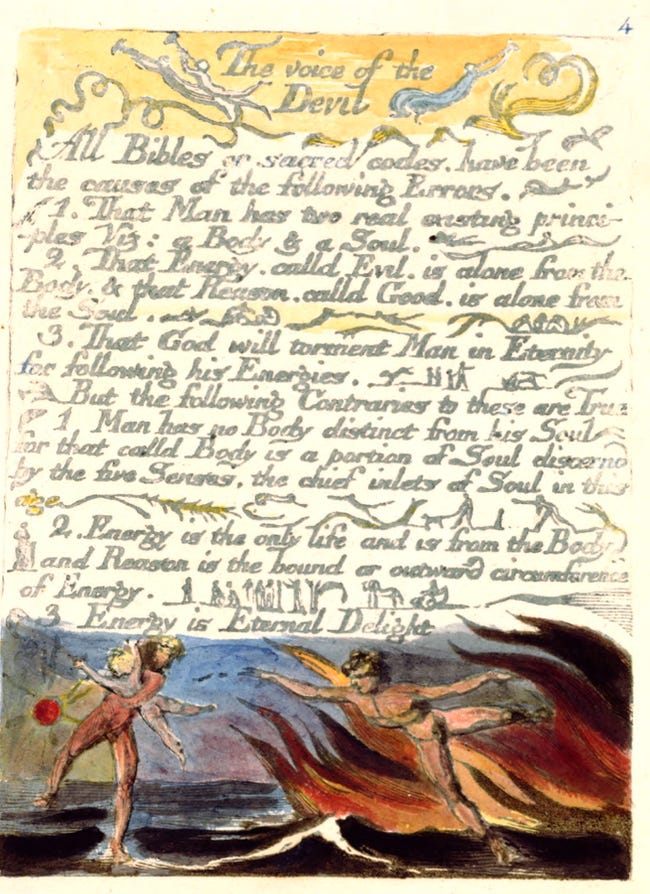
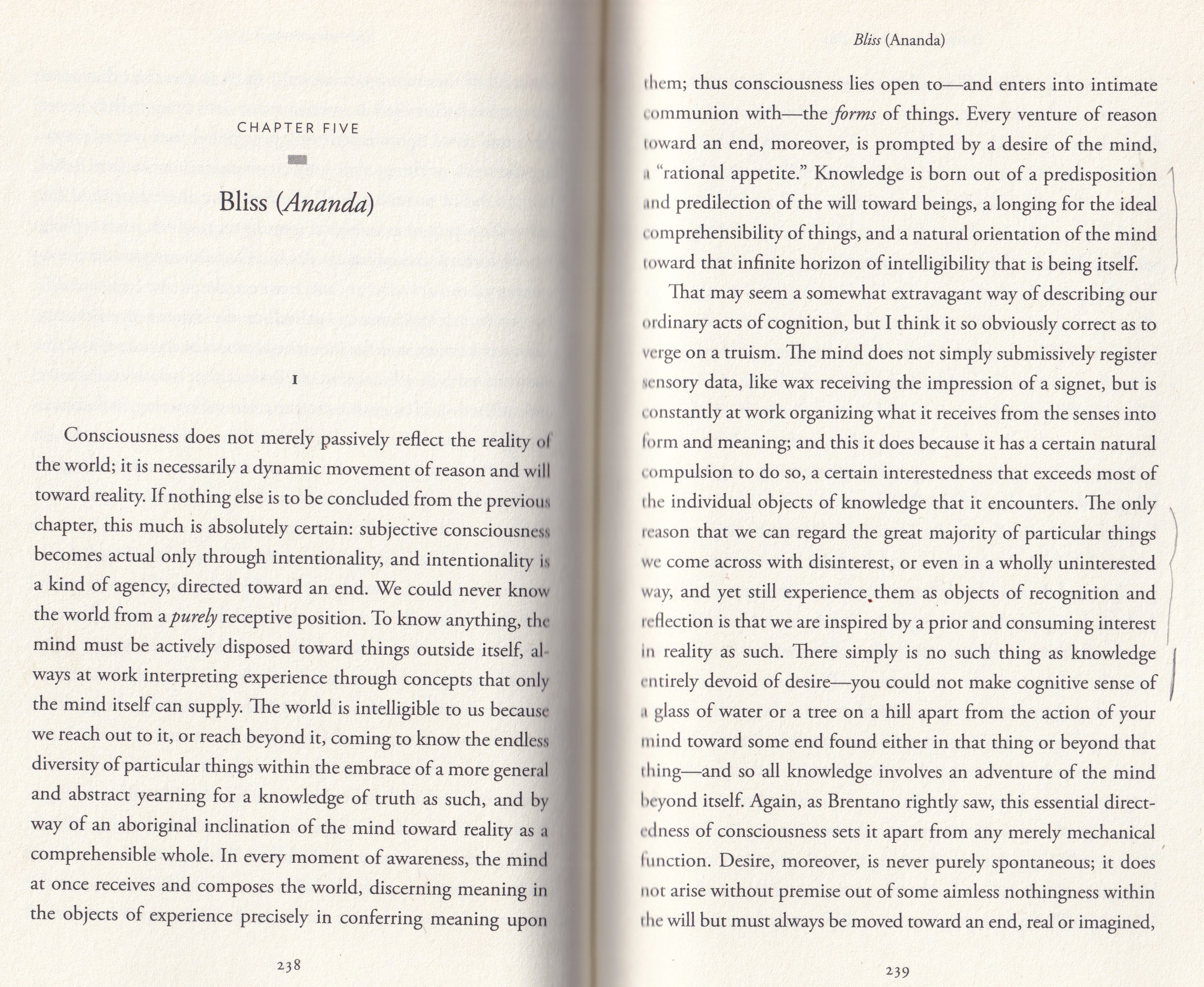
And as Blake infers with those 3 principles, Hart’s mind is tormenting his soul by shilling a snake-oil version of God. Here are the first two of the four heartless Hart pages we were sent to read:
My Introduction to Being a Man: An Embodied Christ Anti-Mind Backstory
How to write a criticism of mind-as-god without the ego-mind’s clever wordplay stepping itself in as if it is God? The god that will paint this body of experience, this experience as body, out of the picture instead of into the invisible tattoo?
I’m not sure. I read out loud an earlier version of this effort to a new friend in order to bring body using voice into the experience of the words I had written. And that reading-experience wasn’t enough to groundify my effort outside of being the sound of two word-devils squabbling like agéd he-cats looking to procreate with a cat-as-god-simulacrum. As it happened, the sound of my voice had my fingers twitching to scratch out all that I’d written. His feedback confirmed that, too. And so that is what I did. This is my second at bat. Words of the mind, an infinite strange attractor because mind-centrism always finds reason to squawk rationalism. Whereas this body is wordless, and therefore is effortlessly always at rest in the moment.
‘So what?!’ you might descry, asleep in the dream of body as that from which all evil permeates everything everywhere all the time — or so the mindful mind tells us, demands for us to find bliss absent the eternity of sensual delight, to paraphrase William Blake. And bedevil’s us with seemingly endless delight by debasing us for failing to find happiness, let along bliss in insensate words.

I was one of them. I was, one of them, who chased endlessly words as if they were the tools to free my mind from using words to free my mind from chasing words as if words were actual truth-carriers and not snakes selling disembodied spiritual panaceas and utopias as the secret to end our wordy narratives of victimhood and suffering. Eve, after all, was seduced by words. Her words then seduced Adam. Men have been faced with the siren’s lure from the beginning.
The Harts of the world love to point us to the narratives’ dragons — well, inked dragons battled with wordy swords on yellowing paper. Where’s the next, better than the all rest, self-help books, yoga and meditation-style classes, vegan diets with gmo fake food, perfect on paper mates, jobs, toys, children? Education as the ability to regurgitate words?
Of course I’ve read about grounding. Such great words. Words, words everywhere, and not a piece of peace to be found in, around, beneath or with them.
I’ve had two days of massage, deep deep tissue scraping that had me writhing and yelling out the pain I had created with my body over the years by ignoring the beauty of this beautiful form. I hadn’t attended that my somatic awareness process, which has been profound and powerful, was also allowing me to ignore how I felt my Self as being an ugly lumpen creature, graceless and abhorrent. The therapist not only massaged the tissue, my tissue — my body — he also massaged the issue, my issue: my hidden shame and mental perception of my ugliness in form. Amazing hypocrisy! Hip-ocrisy. And with perfect synchronicity he came into my life with a masculine truth that went straight to the heart of my self-loathing and shame. And confirmed that Hart’s clever moral language is a distraction that moves us away from embodiment.
2025 was a wordshed year, the bursting of the leviathan when I discovered that the lie is the thing that keeps me locked in the victim narrator as egoic king. It is only words that lie, stories that lie, mind that lies. Our bodies can only rest in truth otherwise it would die. Words are, to paraphrase Martin Luther, the devil’s pustulant whores and pimps dressed up to the nines in ill-fitting PhD and theological tuxes and too short cocktail dresses, holding words, like martinis, with a twist and a cold and empty face:
[Words are] the Devil’s greatest whore; by nature and manner of being [words are] a noxious whore; [words are] a prostitute, the Devil’s appointed whore, [that] ought to be trodden under foot and destroyed, she and her [siren’s appeals to truth, morals and] wisdom (Martin Luther, Works, Erlangen Edition v. 16, pp. 142, my adaptation and paraphrase).
In this year I discovered that the moon landing is a big cultural lie:

Why This Is A Big Deal, Although Maybe Not For The Reasons You Think: What Means The Creation of a False Idol? Jan 09, 2025
The sigh of relief I felt in my body with that realisation was like I had disrobed a chain mail suit of armour.
A few months later a bigger apocalypse exposed itself to me: feminism. The shock and awe of that fully embodied lie took several months of digestion and expurgation before I put it into words:

September 2025: Yogic Life Update with ClearVision Eye-Kriya and I Introduced My Self to Feminism And Am Surprised to Discover it to be Evil Incarnate. Sep 15, 2025
I saw that it was I, and the simps like me, who had given the cultural space for the clearly deluded ignorant Miss Arkansas and her feminist ilk to advocate 99% male genocide by not calling it and them out a long time ago: I had, by omission, supported the steady creep into society of this malignant even pernicious evil built on lies and the abuse of language.
That came with a huge, one of my biggest, ‘ahas’ of relief. And more unconscious self-disgust was exposed. Another cultural lie laid bare. A few hours later I went to bed early and slept for 13 hours. The following day I purged myself with diarrhoea. And, wonderfully, the nearly crippling pain I’d been experiencing in my hip subsided to almost nothing (slightly edited).
The body doesn’t lie.
It is delusion, and perhaps even one of the greatest of conspiracies, to tell us otherwise. This is very old. I argued that the development of the formation of the catholic church was to gaslight people into believing the church authority with the reasoned advocacy of apostolic practices because once the real authority of truth, our body, has been replaced with the word of the apostles, then the lie becomes the thing to capture the mind to make us the playthings of kings.
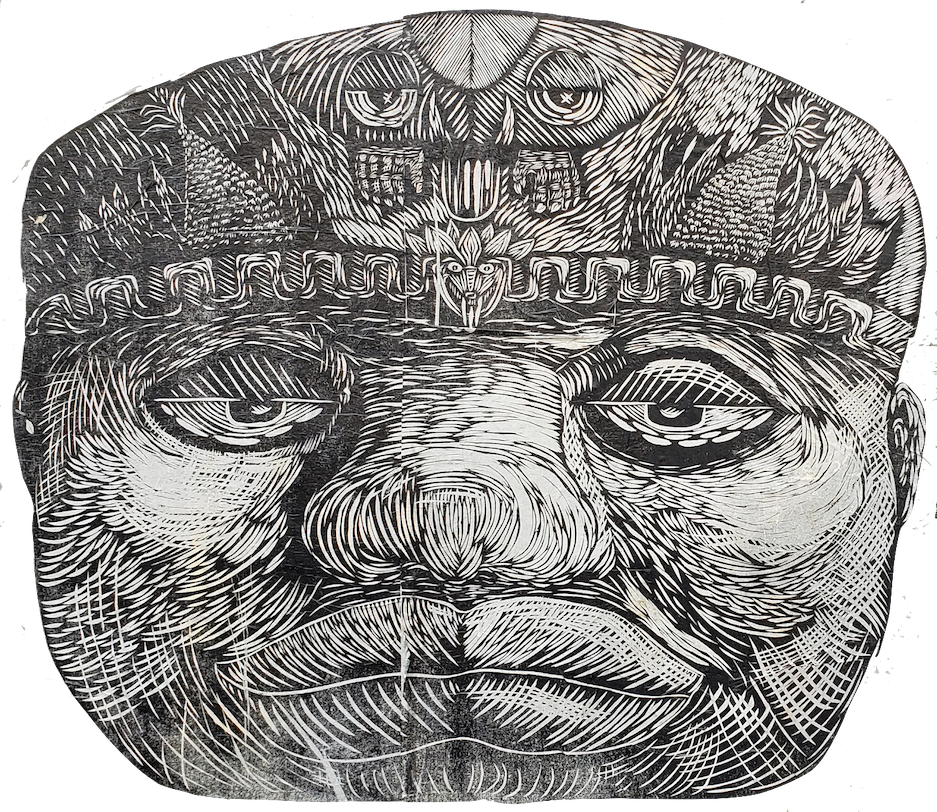
And about a month after the monstrosity of feminism as the devouring mother in the shape of Medusa was revealed to me, something happened. To me, as body without mind to impede it or to diminish it, I had turned away from the forested area beside my cabaña. It is dry here, and so peeing into the dry grasses under the blue sky is encouraged. After I finished I stepped towards the view where the high altitude sun was continuing to move up over the eastern mountains. I paused to observe this diurnal thing through the leaves of trees. And without warning, faster than the fart of thought, the things of the world I had been observing became who I am. The world was no longer out there, something to be looked at. The light was the sun and all around me shining into me and out of me at the same time. The sounds of insects and the susurrus of the leaves vibrated into me and out of me. A bird flew by and the wings lifted me into the spaces between the molecules of air as effortlessly as wordless flight. The smell of dry grass and fresh air was me too. The sight, sound, smell was as infinite as it was contained. And my body was the source and the grail.
And with a clarity and surety that makes absolutely no mind-sense, I realised that I had received, like the grail, Christ’s blood, which is not the colour nor the texture nor the perfume of wine. I was experiencing Christ. I was Christ, the Christ experience. And that pretentious phrase, I am Christ, is without ‘am’ meaning the physical embodiment of what the books describe.
It, whatever my experience is, is absent from those important books with endless words that without end fail to embody experience. Not in books is to be found life itself, being alive is to be, and to be is Christ. The body is the embodiment that is Life, that it is Life that holds Soul, my Soul, World, Soul, Christ. And far beyond that because it, whatever it is, is without words and their innate demarcations of reason as prepackaged and intent.
The Christ that can named is not the true Christ. It was this nameless Christ that stayed with me for two or three hours in the trees and the grasses and the bugs and the sky around my cabaña up the side of a mountain in México. Wha’ tha’!?
Why Christ? I am not a Christian. At best I am a curious cherry-picking bible dilettante. I don’t go to church and I have even written that Catholicism is gaslighting on steroids! Wha’ tha’!?
The Christ that all hail is
not the eternal Christ.
That which is beyond Christ is the actual origin of
Heaven and Earth;
What is named is that which can be understood;
And it is that that is the mother of all things.
When we know the unnamed Christ beyond Christ,
When we are aware of non-being
we see the subtlety and nuance between
the named and the unnamed Christ.
— my rewrite of Chapter 1 of The Tao Te Ching.
My Men’s Group
I have no idea how Jasun’s men’s group compares with other mens’ groups, because I’ve not been part of one before. His focus is on men’s struggles to connect to truth of Self as a land creature currently hypnotised by words as a sine qua non bauble of distraction. And how to square that circle with the blisses and torments of sexuality, family, and the experience of the opposite sex as Medusa far more often than as an embodiment of anima as liberatrix.
So what is it about this heartless Hart that jarred so effectively my mind and fingers?
Heartless Hart: His Curious Denial of Delusion by Promoting Will as Creating Good Outcomes

From chapter five of Hart’s book: Bliss (Ananda)
Knowledge is born out of a predisposition and predilection of the will toward beings, a longing for the ideal comprehensibility of things, and a natural orientation of the mind toward that infinite horizon of intelligibility that is being itself (p239).
This is fundamentally flawed. It makes explicit, to me, that Hart believes the mind is able to comprehend the infinite. A dubious stand. It also presumes (infers?) that when we use the mind’s longing for comprehension of the 10,000 things, that the mind is without bias in its perceptions. This is not tenable. How have I heard it put? To use the mind to fix problems created by the mind is fruitless. All problems are of the mind, its perceptions and rationalisations of those perceptions through a frame or filter of belief. And of course, the trite and commonly known and almost completely ignored truth that what one believes becomes that which one sees and experiences. To change the mind, is to change the experience of life.
Also, the use of reason, ie logic and/or the process of logical conception, perception and deduction is, likewise flawed. And not only for the reason above: it is flawed because logic does not exist in a vacuum. Logic cannot function without some kind of boundary condition to frame it. Nor does it exist outside the mind. Logic is delimited by the contents and irrationally produced framing and/or idea-structures within which the mind exists. In other words, the mind and its reason as the expression of the mind’s existence is dependent on the irrational. And with great irony, the mind then irrationally denies that dependency.
Perhaps more specifically, the mind’s vitality arises from the contents that the mind is aware of and that has deemed to be, for whatever reason, important — without questioning where those contents originated. Where do the contents of the mind come from? And what determines, or more accurately, predetermines for the mind, out of the all that is, those specific conceptions that are important enough for the mind to use as the framing material for its reasoned functioning and associated applications of logic? As C.G. Jung cogently argued: the unconscious really is unconscious. And that the mind is a tiny insignificant bobble of incoherent rationalisations floating on an infinity of what is the unknown. The mind, as Hart infers, is an acme of correct perception arising from a desire to fill lack while glibly denying the reality of the omnipresence, and even omnipotence, of the unconscious. The insignificance of the mind’s actual power is most easily described with the delight that the mind seems to have whenever it says, with hubristic impunity, ‘That that is only the unconscious’, as if the mind having named it has possessed it and with that naming has depotentiated the unconscious. The naming of it has darkened its invisibility.
The mind … is constantly at work organising what it receives from the senses into form and meaning; and this it does because it has a certain natural compulsion to do so, a certain interestedness that exceeds most of the individual objects of knowledge that it encounters (p239).
This is fundamentally flawed, even if it is not necessarily entirely incorrect. It is more accurate to consider the mind as the agent that takes input it can magically cognate and, using pre-configured frames of unconsciously formulated intention, meaning and/or understanding, assigns the cognate where it fits within the unconsciously structured hierarchy of meaning, purpose and intent. It is a kind of hubristic failure of the mind to think that mind is in control of its cognition. The mind is more like a slave to elements of consciousness and unconsciousness that mind is mostly unaware of. And that includes the purely physical nature of life and the energetic substrate that I will describe as the spirit that animates matter in a way we perceive as life. That I earlier this year experienced as the non-biblical Christ shortly after I peed on dry grass.
Hart’s emphasis on desire as a, perhaps the, motivating energy towards awareness outside the mind — which I understand him to mean elements of existence that are materially external to the body and that are perceived by the five senses — likely arises from or is parallel to much of Blake’s argument in the Marriage of Heaven and Hell. My more recent understanding is that it is not desire that is the motivating energy: it is curiosity.
What is the difference between desire and curiosity? My sense of desire is movement towards something as being able to complete or satisfy some missing element of interest or, more likely, emptiness or the feeling of lack. It comes from a very subtle state of anxiety or lack. Fear. Curiosity does not have that feeling of looking to complete the heart’s desire: curiosity is simply the core question ‘What is?’ I had originally thought to write ‘What is true?’ And now I understand that even that is also a kind of red herring that takes us off the path of ‘What is?’ Or even, to bring this idea more closely to the heart, perhaps the question is ‘How am I not that which is?’
This can also be approached from the perspective of the question, not from any sense of desire, ‘Who perceives ‘what is?’
The only reason that we can regard the great majority of particular things we come across with disinterest, or even in a wholly uninterested way, and yet still experience them as objects of recognition and reflection is that we are inspired by a prior and consuming interest in reality as such (p239).
Hart has me laughing with this because it is so obviously and easily disproven. Even before the mass delusion event of the convid (COVID-19) many people and, very likely, the vast majority of the convidians claimed with screams of fear and moral excoriation and self righteousness to feel more content and safe living in delusion and denial of reality. Many of the overt critics of the convidian psyop as a blatant delusional propaganda event experienced extreme censure including family rupture and expulsion, smear campaigns, de-accreditation and job losses. Reality is dead! Long live the delusion!
That is just a recent example, of course. The ‘problem’ of mistaking delusion of the mind as truth is widespread and so stupefying that we are alive in a time so mind-blind we have people who think a manified woman can create sperm and a womanised man can give birth and anyone who denies that is a nazi who, to save society from naziism, is best killed.
Reality-denial is perhaps the most commonly and significantly addressed failures of mind in thousands of years of philosophical discourse because thinkers and spiritual investigators see clearly that it is delusion that is the root cause of all unnecessary and protracted suffering. Gautama directed his disciples to undertake ‘right seeing’ as his first prescribed ‘medicine’ to reduce suffering. Plato comments on the ease with which the mind mistakes shadows for reality. Patañjali suggests that wrong seeing is the cause of all suffering. Each of these few, of many, know mind to be the false prophet.
Hart is an apologist for wrong seeing because he mistakingly sees that mind has depth and stability enough not to be fooled by its own inner machinations and rumination, let alone how easily the mind is tricked by magicians, priests, cult-leaders, ideologies and whatever other trusted authority the mind turns to with the desire to be free of fear and anxiety. And once fooled, the mind often refuses to unsee the foolery, preferring to remain tom fooled. And that it revels in its tom foolery by framing any and all evidential counter-perceptions as misperception. Twain’s foolery comment stands the test of time: It is far easier to fool someone than it is for the person having been fooled to accept, let alone realise, having been fooled. (My paraphrase.) Perhaps the following is worthy of a tripe, er I mean a trope: fool me once, shame on you; fool me twice, shame on me; fool me thrice, I’ll be your fool until the end of time.
From the I Ching:
When we are faced with an obstacle that is to be overcome, weakness and impatience can do nothing. Strong individuals stand up to this situation with equanimity, for inner security enables the strength that endures to the end. This strength shows itself in uncompromising truthfulness with themselves. It is only when we have the courage to see things, other people and ourselves in the circumstances of life in this moment, exactly as they are without any sort of self deception or illusion, that we recognise that we have the strength to see the light that develops out of events by which the path of action that will successfully remove obstacles and/or suffering may be recognised. — from hexagram #5 Hsu / Waiting (Nourishment), I Ching translated by Baynes/Wilhelm (my edit).
Way back, when the earth was green and I realised that all news was propaganda, I shared with whoever I thought might enjoy it, the following joke:
Q: What did the one enlightened (not deluded) lemming say to the other enlightened lemming?
A: ‘We’re going the wrong way!’
It turns out that the joke was on me and becomes a delightful meta joke when, later, I learned that lemmings rushing over a cliff to their death was a narrative (complete fabrication) created and promulgated by Disney in its popular movie, White Wilderness by filmmaker James R. Simon. Lemmings do not kill themselves: the depiction was created by the film maker with having paid youths to collect them and then arranged to throw them over a cliff.
Heartless Hart: Denial of the Unconscious by a Rationalised Nothingness
As I continued to read Hart, he contradicts what he wrote in the previous paragraph and makes a claim that infers the rationality of applied reason.
Desire, moreover, is never purely spontaneous; it does not arise without premise out of some aimless nothingness within the will but must always be moved toward an end, real or imagined, that draws it on. The will is, of its nature, teleological, and every rational act is intrinsically purposive, prompted by some final cause (p239).
Desire … does not arise without premise out of some aimless nothingness within the will. .. Every rational act is intrinsically purposive, prompted by some final cause. Desire does not arise out of nothingness?! It is born within the will, no less! Wha’ tha’!? Not only does Hart elevate reason as all encompassing, which his writing elides as desire, he denies that its existence depends on anything outside of the mind. Wow! What an astonishing denial of the predeterminate nature of the unconscious. LoL! Of course, he doesn’t see his act of denying anything as unconscious because he has fallen into the trap of a mind-centrism, that mind is all, and that the unconscious does not exist or, if it does, it is under word control and so of no mindful impact.
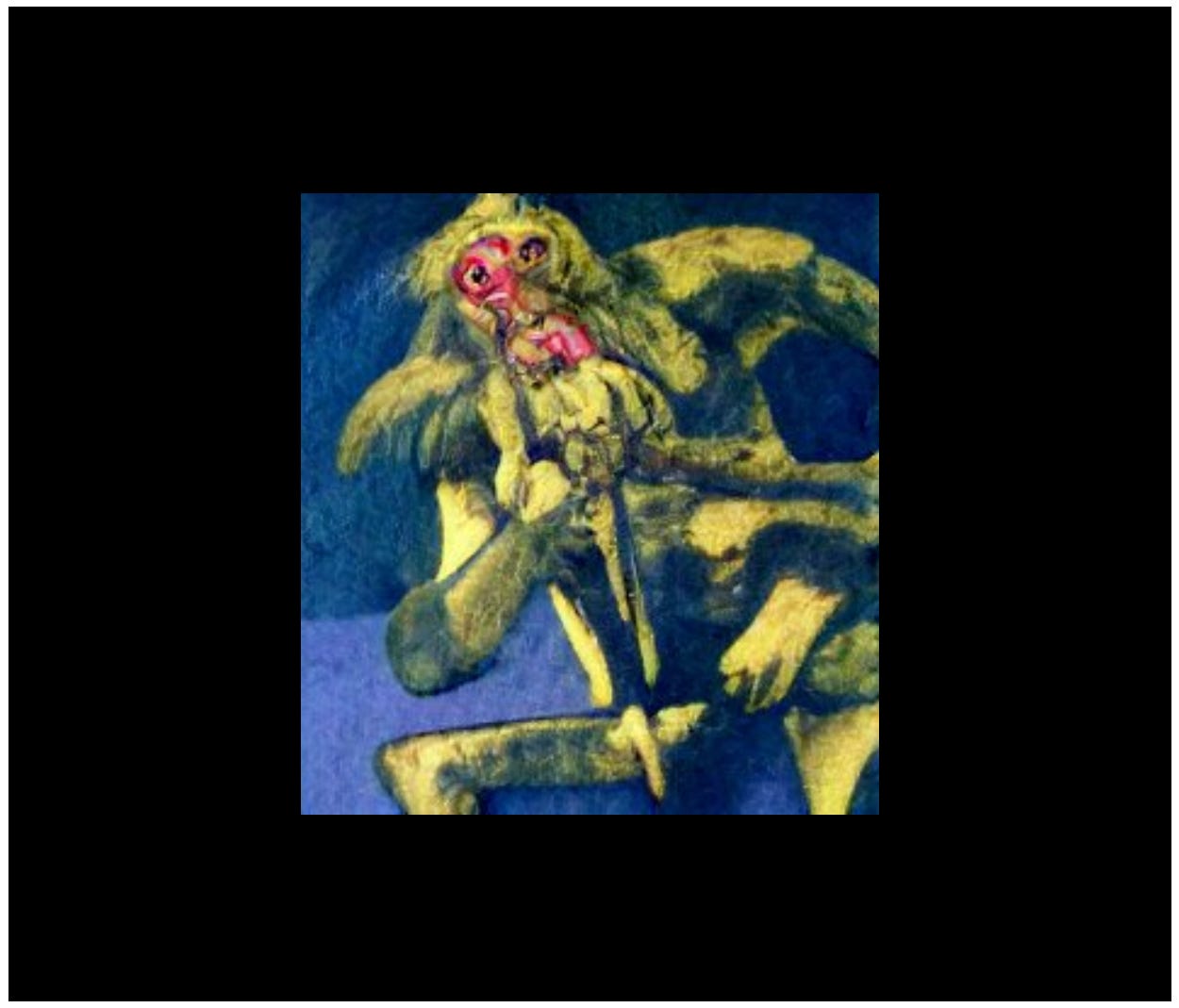
And yet reason starts with a premise arisen from nothingness and its final cause often, perhaps even always, creates perversion and destroys itself when taken to its logical conclusion. For example, the out of nothingness idea of evolution as purposive towards animal perfection. If evolution is the random act of creating the most evolved creature, then evolution will work more effectively if reason helps it along. And thus the reasoning mind purposes as reasonable the killing of the defects in order to speed the evolution of the most healthy. And so eugenics arose and from that the Jewish solution to purify the human race. It is, by reason’s standards, not actually an unreasonable or irrational action, even if the majority found its execution an abhorrent abomination — although only with hindsight and without awareness that it was a consequence of uncontrolled moral reason. In turn Zionist Israel has rationalised their attack on the civilians of Gaza with a similar moral assignation of that group as being lesser-thans like they had been assigned by Aryan moralists. So nineteenth century eugenic population ‘cleaning’ practices continued for decades beyond the holocaust with enacted sterilisation laws applied to the unworthies into the late 20th century. And those practices continue even now in many countries with the promotion of pre-natal genetic testing in order to reasonably abort human defectives. And in recent years eugenics has been extended in, for example, Canada’s aggressively promoted MAiD (Medical Assistance in Dying) programme. From assisted suicide for reasoned adults it now targets elderly people and infants born with health issues because the continuation of their lives is perceived as an unworthy burden to the state. And that now includes actively encouraging depressed teenagers to kill themselves. See The Face Of Evil: Canadian Doctors Push to Euthanize Disabled Babies: This demonic playbook is nothing new — it’s the same one the Nazis used to exterminate the “undesirable” by Lioness of Judah Ministry, Aug 29, 2025. And see her substack for the many other aspects of MAiD being used and developed. For another example, see Minors should be eligible for assisted dying, parliamentary committee says.
An impactful example from feminism is the sordid history of one of the icons of feminism, Margaret Sanger, who used her mindfully moral eugenical reason to concentrate her promulgation of abortion clinics into the black communities — in order to assist in the removal from Aryan perfection those undesirables from the human population. As of today, black women have the highest rates of abortion in the USA of all the racial groups. (”The most merciful thing that the large family does to one of its infant members is to kill it“ — Sanger.)
Blind application of mind and reason is one of the greatest sources of ‘evil’ because the mind effortlessly uses reason to create the morals that reason then uses to anchor as a rationalised ‘good’ the removal of human compassion. Sanger is a great example, although there are many others who exposed themselves during the convid. When taken to the logical end, reason ends up with the deaths of that moralised reason’s target.
I’ve been wrestling with the ’truth’ of that blanket statement: do all morals, in the (mind’s) desired end, somehow in the terminus of rationalisation from that moral, arrive with a thud or a smile with the disenfranchisement, scapegoating and/or death of a group? Yes. The use of morals and morality is the core of all group-think activities. And group-think (a rationalised refinement of tribalism) is always about separating the deserving from the undeserving. And that separation is a mindful activity of morality, ie the rationalised removal of compassion.
Heartless Hart: Possessing the World as THE Acme of Human Perfection Instead of Egoistic Narcissism
Perhaps this is all only the special predicament and glory of a remarkably fortunate primate, and we have become the rational possessors of the world only because we have somehow acquired a pathetic hunger for an illusory end-”truth as such” —that transcends all those merely concrete objects of awareness in which we might or might not have some interest (p240).
Wow. What is Hart saying with that? That our (human) possession of the world is the blessed result of a pathetic hunger for delusion? And that that delusion is truth? Truth is a delusion? That the mind’s facile delusion for the pursuit of truth has irrationally and accidentally albeit fortuitously created the ache of emptiness? That the mind’s desire to fill emptiness is that which creates our ability to perceive reality as ‘real’ and allows us to conclude that material reality is truth absent of the delusion of truth?
This is astonishing, to me. Hart, with the ease of a reasoned ideology of human reason as his sine qua non version of non-delusional truth, so casually dismisses a core philosophical tenet of what is constituted as truth. For more than two thousand years the apex of human achievement wasn’t reason chasing sensual perception for a surrogate to truth. It was in the mind’s ability to learn the primacy of Truth, Goodness and Beauty as the meaningful path by which human power and achievement is to be developed. Many consider, rightly or wrongly, for thousands of years, that these are the pillars of the development of the very best expressions of western civilisation in its extraordinary achievements in the arts and humanities.
Veritas, Bonitas, And Pulchritudo in Latin. These three words are often referred to in philosophical circles as the transcendentals. They are modes [of perceiving facets of existence by which reality is to be understood in that they each show us a facet of what is real]. By exploring them we gain a deeper understanding of and appreciation for all things as they really are (Truth, Goodness, and Beauty in Perspective, by Redeemer Classical School, September 15, 2023, slightly edited).
Hmmm. And so it is clear to me that Hart is a secular apologist disguised behind a mask of theology.
What Then is the Value of the Mind?
I will conclude with the words of a Christian, who many find anti-bible and an improper Christian: Jesse Lee Peterson in conversation with the female anti-feminist, Pearl Davis.
26:52 [PD] What’s perfect peace like?
[JP] That’s an amazing question. What perfect peace is not having to think about anything. Perfect peace is having no past and no future. Perfect peace is not judging anyone at all about anything. Never judging anyone. Perfect peace is neither for or against at all. You have no opinion either way. Perfect peace is living from within and having no ideas. [Laughter.] So, having no anger or anything.
[PD] Don’t you have opinions on things though?
[JP] No. [Laughter.]
[PD] Why are you here?
[JP] Why am I here?
[PD] Okay. No, cuz you’re here because of your opinion. [Laughter.]
[JP] But my what I—
[PD] Would you say they’re observations then?
[JP] Absolutely.
[PD] Yeah. Okay. That’s how you— Okay.
[JP] Because they’re not my opinions. I’m looking at what I see, right? And I can see the wrong in it. But I also know that it’s not the person that’s doing it. Something else is working through them. They just don’t know that. Something else.
[PD] I hear you say that a lot. Does that mean you think it’s like demons or something?
[JP] Not that I think. I know it is.
[PD] Okay. And so that’s where you think thoughts are from, demons, right?
[JP] 100%. Yeah.
[PD] And it’s just like demons in your head.
[JP] They make a home in your mind. And then and they control you by making you, causing you, to become emotional. And the emotion that you feel you think is you. You know, the person thinks it’s them right. And so they are identified with the emotion. And they think they create their own thoughts. But when you ask people, do you create your own thoughts? Yes. And so, okay, give me the first three steps of creating your own thoughts. They’re like, well, I guess they just come. So, if they just come, how are you creating them? You know, and people think that they are creating the thoughts, but they’re not.
[PD] And so, you’re saying it’s demons basically that make a home in you.
[JP] Yes.
[PD] That come from the moms.
[JP] Yes. [Laughter.] Because the mothers are evil. All the mothers are evil.
[PD] No, they are.
[JP] Yeah, they’re really evil. It doesn’t matter the colour. It doesn’t matter the money they have or don’t have, where they live or don’t live. It’s the spirit of the woman. That’s why Christ said that all who were born of the mother of the woman of the flesh must be born again of the spirit of the father.
[PD] And that’s because of original sin, right? Because Eve, like— Do you know what’s crazy? In these churches, they’ll say like, ‘It was Adam’s fault. Eve took the apple.’
[JP] Blame Adam for that. [Laughter.]
[PD] I’m like, ‘What did he do? He was just chilling.’
[JP] Right. He wasn’t even around. Eve was out at the marketplace. And she ran into Satan at the marketplace and he finally convinced her that she could be her own woman. You know what? He said ‘Don’t listen to your husband. He’s listening to his father. You can be your own woman. You can take off your bra. You can do whatever you want. You can kill the baby if you want to.’ And she believed him. And then Adam eventually believed Eve, and so the woman became the man’s God. And that’s why men got to forgive their mother so they can turn to the father.
[PD] Because how can you say you fear God if you fear women?
[JP] That’s right.
Jesse Lee Peterson Joins The Sitdown: New Black Fatigue and Old Jim Crow by Pearl Davis 19 Nov 2025.
The end. Of mind? Maybe, if we are lucky? Thank you for your attention.
Song of the Essay
Scheherazade, Op 35: II The Kalendar Prince by Nikolai Rimsky-Korsikov.

🙏 If this essay gave you some pleasure, and/or an ‘aha’, extend our human intimacy and become a paid subscriber.
Or click on the coffee if you would like to buy me a coffee:

All the best with what is changing. Everything changes. Peace, respect, love and exuberant joy. 🙏
Essay Playlists:
Spotify
YouTube Talk
YouTube Music

Advertisement for Life Upgrade Opportunity
I offer a 48 hr personalised life changing upgrade-your-life course that includes elements of the principles of yoga, breath, Jungian psychology, somatic body awareness practices, zen and/or koan meditation practices, personalised refinement of food and body cleansing process — all customised by you for you with me as guide. Comment for more details or DM me. Click here to register for the 3 hr introduction. The fee for that applies as deposit for full 48hr course experience..

We are living the Bhagavad-gita wedded to the great apocalypse! All the best with what is changing. Everything changes! With peace, respect, love and equanimous enthusiasm.
🙏❤️🧘♂️🙌☯️🙌🧘♂️❤️🙏
Hi Guy,
When you say:
"I was one of them. I was, one of them, who chased endlessly words as if they were the tools to free my mind from using words to free my mind from chasing words as if words were actual truth-carriers and not snakes selling disembodied spiritual panaceas and utopias as the secret to end our wordy narratives of victimhood and suffering."
I see much the same lies in that which I brought into the men's meeting time after time. An unbridled contagion that felt like the right thing to do in the moment, because to do nothing as the expression of the saving grace of God might not get the point across.
I reflect very much on the lies of Aaron in the OT, especially in the fact that it is his self-consciousness that makes him intolerant of a known mystery of God, while wielding the word and the lie in order to enact an authority as one ordained but not embodied to be still.
I read the first half, but I ended up feeling like you were strawmanning Hart for your own hidden (unconscious?) ends; unlike you, I have read the entire Hart book, as well as one other. I have a strong aversion, as you do, to the reduction of God, or even consciousness, to “mind,” and am also wary of anything that looks like a denial of unconscious processes. Yet I had no particular sense of that, reading Hart (he is even occasionally humorous).
I would agree, having read the whole book, that he goes on too long and that the book becomes a rather tediously philosophical work (the best stuff is in the 1st 50 pages). But I wouldn’t overly criticize Hart for this, because he has clearly written his book on God with atheists and agnostics foremost in mind, and is addressing a number of the standard definitions, mis-definitions, and arguments for and against God, in an attempt to be comprehensive to the field (he is an academic as well as a Christian).
I am not defending Hart, however, and I am more than open to hearing ways in which he gets it wrong, is a false prophet, has feet of clay, a shill, you name it; I am always open to seeing writers or artists more successful, and potentially better, than me cut down to size. But this essay didn’t provide me with anything I could really use to that end, alas. I found it hard to grasp the precise nature of your disagreement; it seemed more heady-based and abstract than Hart (though I agree the passages you cite seem dry and obscure when taken out of context).
I noted with irony how you used logic to try and dethrone logic. Logic = Logos = ratio = rationality. It is that which brings things into relation and balance; it is the means by which we know God, in the highest sense (via Christ), and anything at all, in the broadest sense.
There are no arguments against logic or rationality, finally, except that, logically, they are limited and that chaos and unconsciousness exist. The fact that all arguments require rationality and logic means the better we argue against logic, the more we disprove our own argument!
There’s a better argument to be made for language as inherently deceptive, but then we also end up in a Catch-22, as Cretans declaring that all Cretans lie all the time.